Lead Designer
July 2022 - December 2023
India
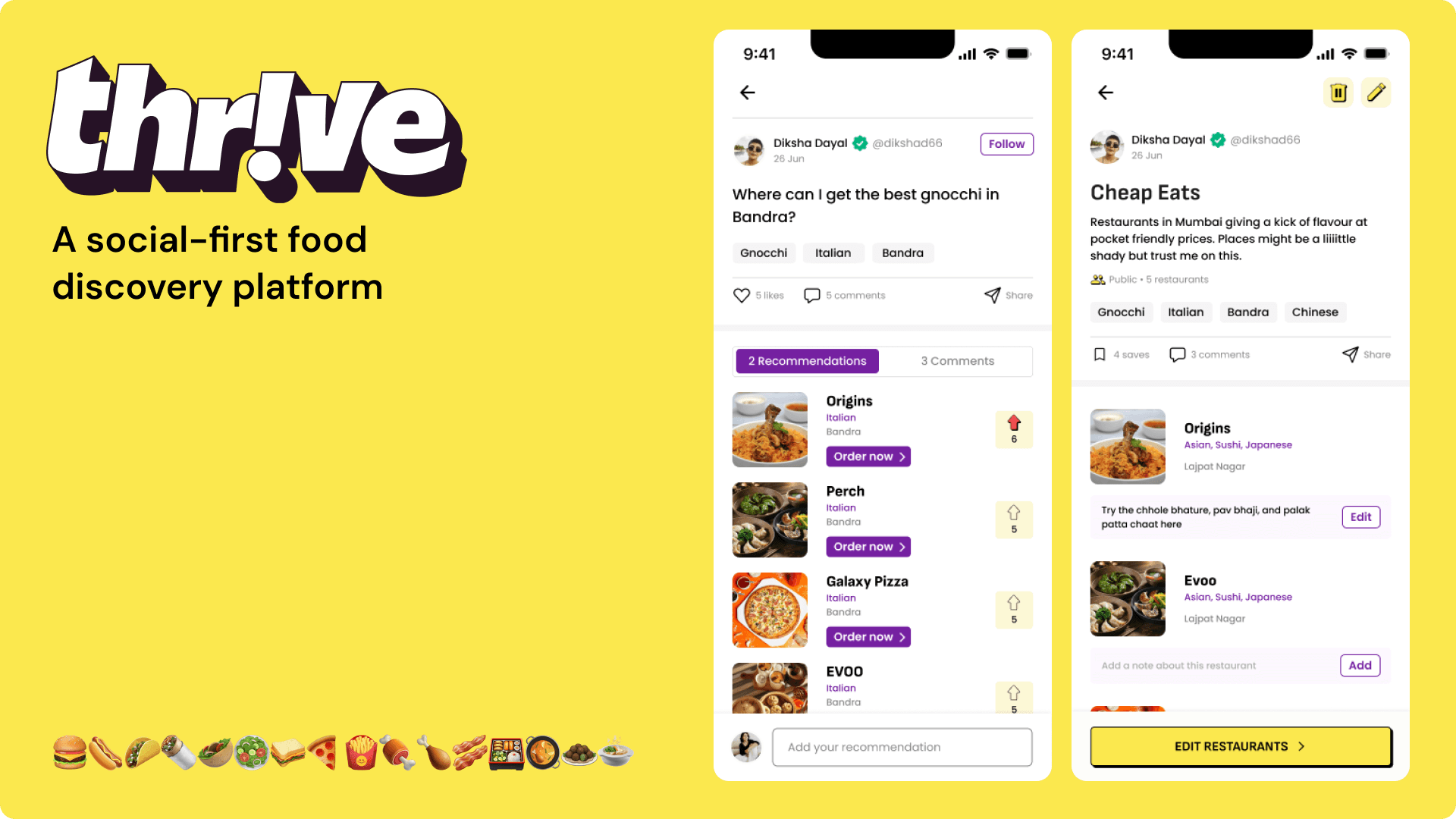
Making food discovery social with Thrive
At Thrive, a direct ordering platform, I helped put a new spin on how people discover food online.
Context
Thrive was a direct-ordering platform in a rapidly growing delivery market. Ordering was easy, but discovery hadn’t evolved.
Challenge
Users spent more time deciding than ordering. My challenge was to reframe this ambiguous problem and design a trusted, human-centric discovery experience.
Role
I led the end-to-end design process: reframing the problem, conducting primary research, discovering how users actually made food decisions, and translating those insights into a social discovery layer integrated into Thrive’s ordering ecosystem.
Impact
40k
monthly active users (MAUs)
+50%
social feed engagement
The launch reached strong early adoption and community love. More importantly, I developed a mature design process grounded in problem framing, insight-driven strategy, and thoughtful interaction design.
The gap no one was addressing
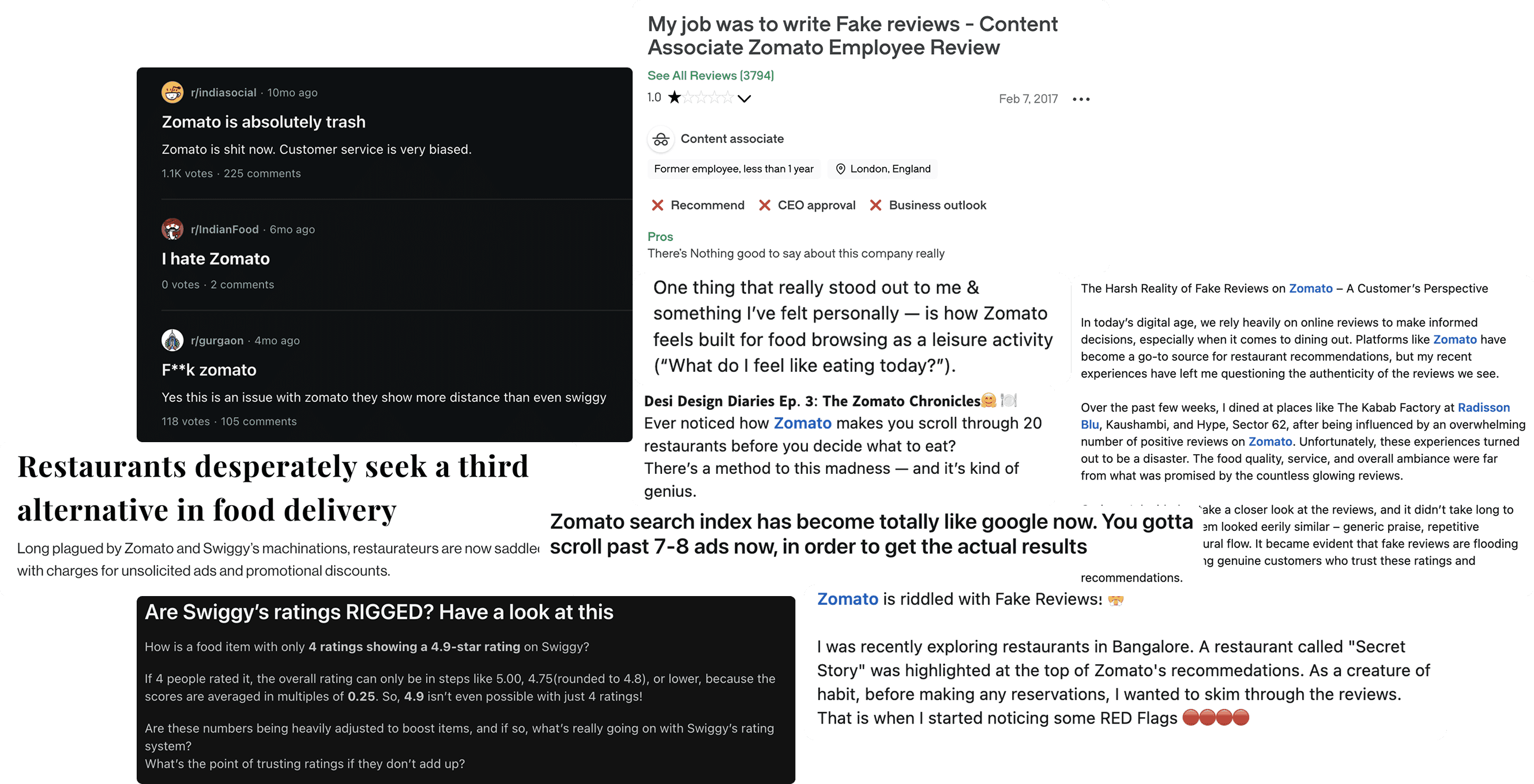
India’s delivery market was exploding, but users still faced the same question every day: “What should I eat?” Existing platforms served infinite lists, generic suggestions, and questionable reviews. Their algorithms optimized for visibility, not taste.
Users made their dissatisfaction clear through social media and news outlets.
The original ask, “improve discovery”, was too broad. I reframed it into a more actionable design challenge:
How might we help people make food decisions they actually trust, without overwhelming them?
This statement became the project's compass.
Uncovering how people really choose food
My research goals were simple:
Find hidden behaviors, not validate features
Understand emotional triggers
Map decision journeys from craving → order
I used secondary research (Reddit, Facebook groups) and primary research (1:1 interviews, Zoom calls, street intercepts) to build a real picture of user behavior.
Through my research, I uncovered my guiding insight.
When people don't know what to eat, they don't ask an app — they ask people they trust.
People were not using apps to decide what to eat. They were:
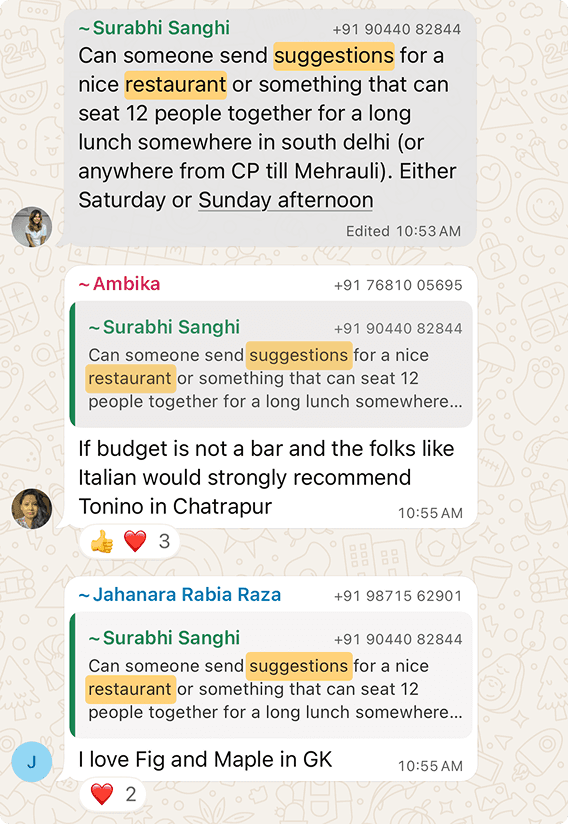
Asking friends on WhatsApp
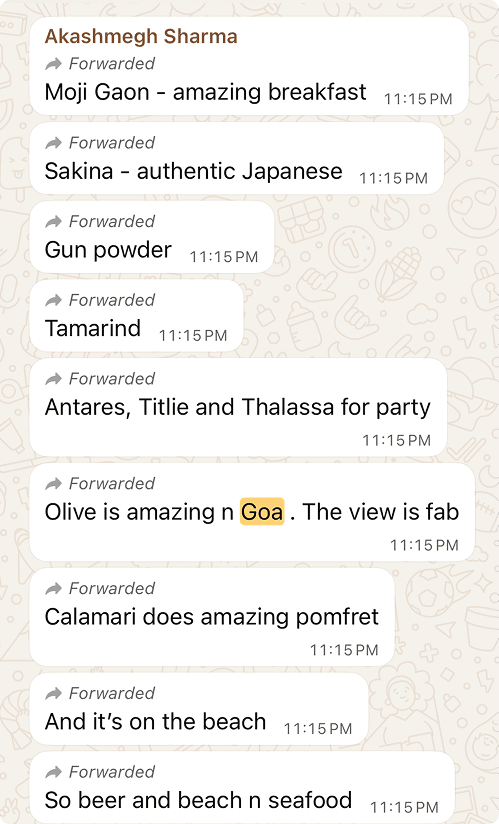
Digging through screenshots
Checking Instagram stories
Consulting group chats
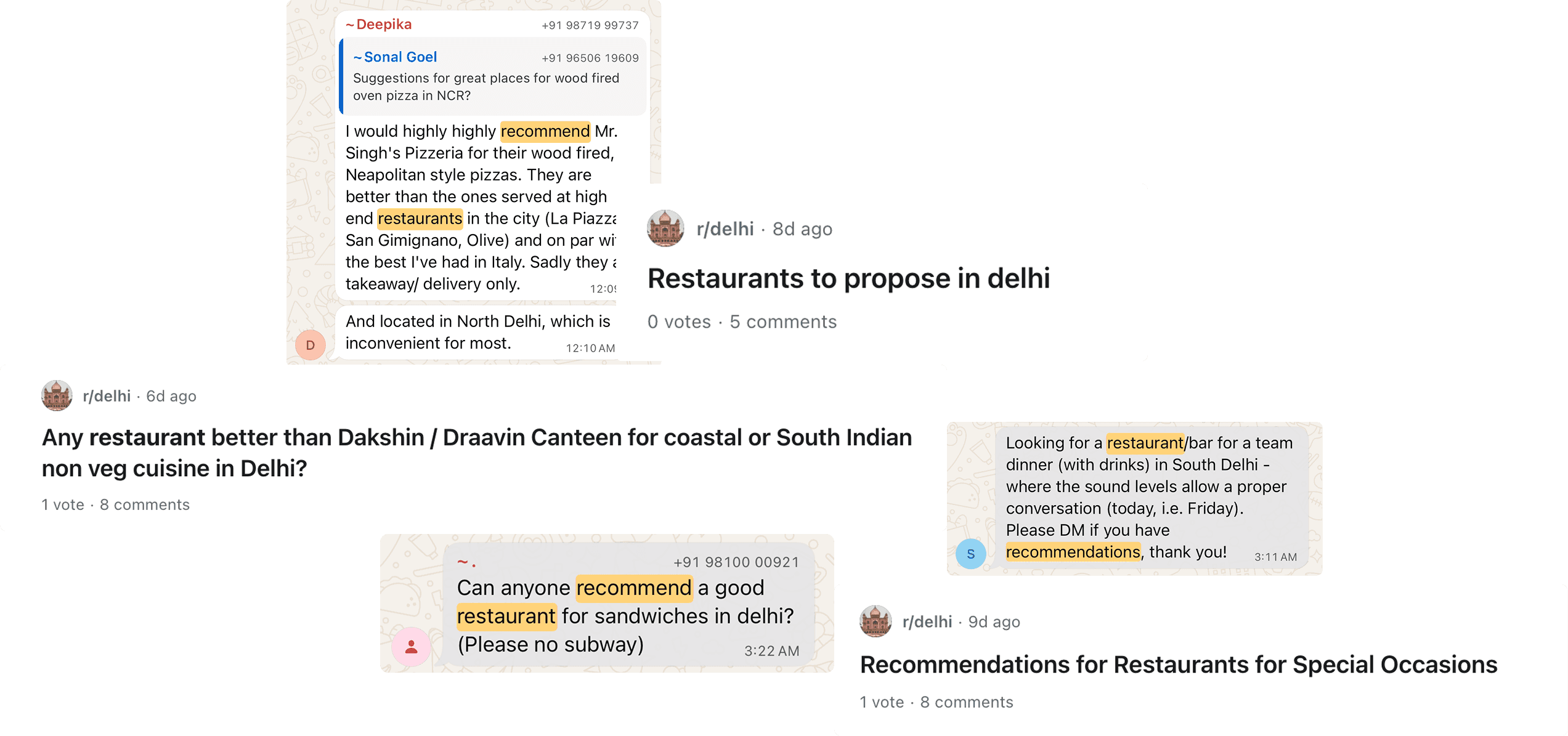
People may pick restaurants from a generic list when they're in a hurry, but when food truly matters, they ask their network. This finding showed up over and over through my research, on social media, on calls, and in person.
Principles that guided the solution
From the insight, I developed three guiding principles:
Mirror real behavior
Don’t force new workflows
Design for trust
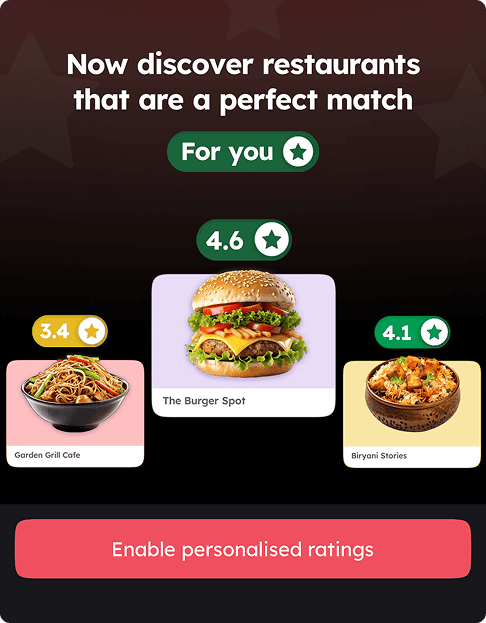
People trust people, not algorithms
Keep it lightweight
Reduce friction at every step
Exploring mental models
I explored several directions — conversational, feed-based, list-driven, hybrid — and rapidly tested them through low-fidelity prototypes to evaluate narrative fit.
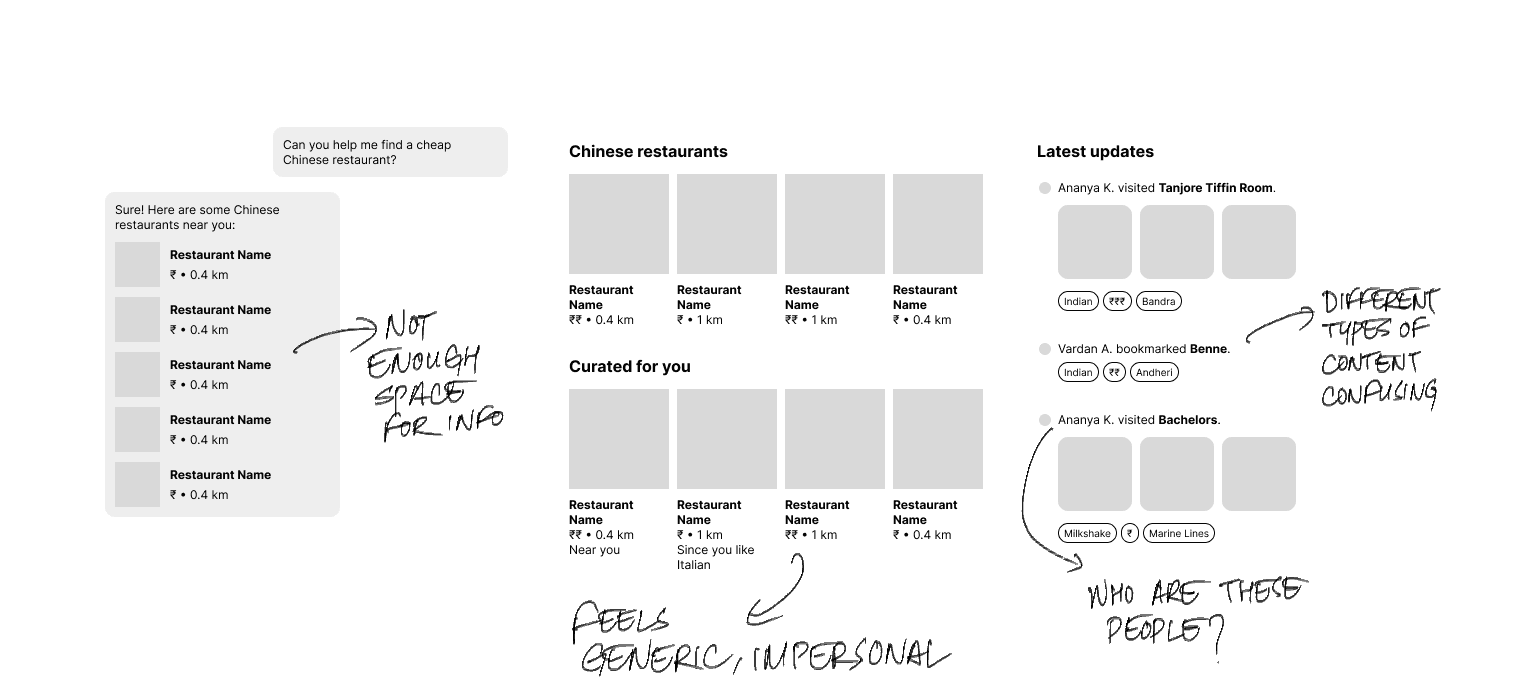
This exploration clarified which ideas supported natural decision-making and which added noise.
╳AVOID
Choosing algorithmic over human
A foundational decision was to avoid algorithmic feeds entirely — they felt untrustworthy and impersonal. Instead, I designed interactions that felt social, familiar, and credible.
✓INCORPORATE
Micro-interactions that build trust
Two key personas
For my MVP, I wanted to target early adopters — people who really cared about food, and who'd be open to downloading a new app that made their discovery experience better. I zeroed in on two key personas:
THE CURIOUS EXPLORER
🕵️♀️
Looking for the best possible meal, this persona peruses reviews and asks their friends for recommendations.
THE DINING CONNOISSEUR
🦸
I then designed two features, each targeting one of these personas.
FEATURE 1
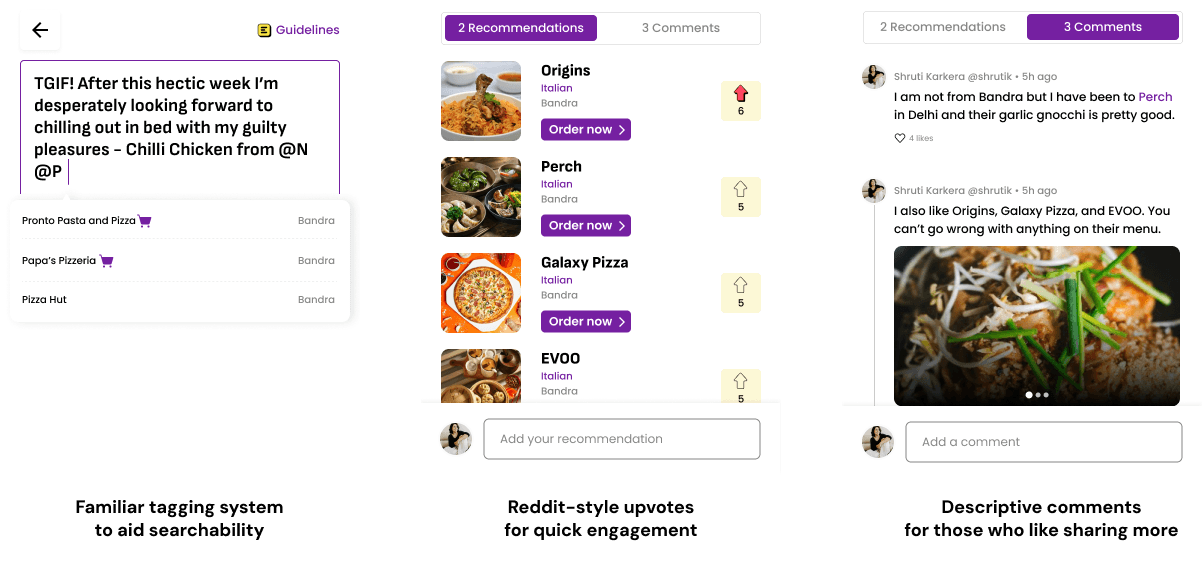
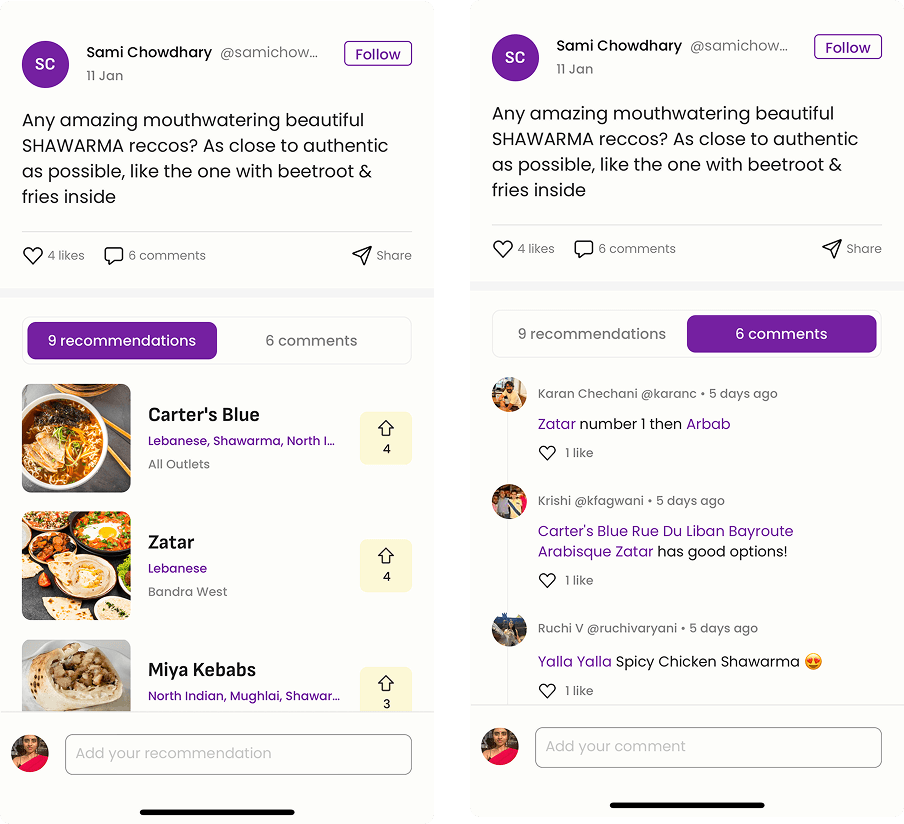
Recommendations
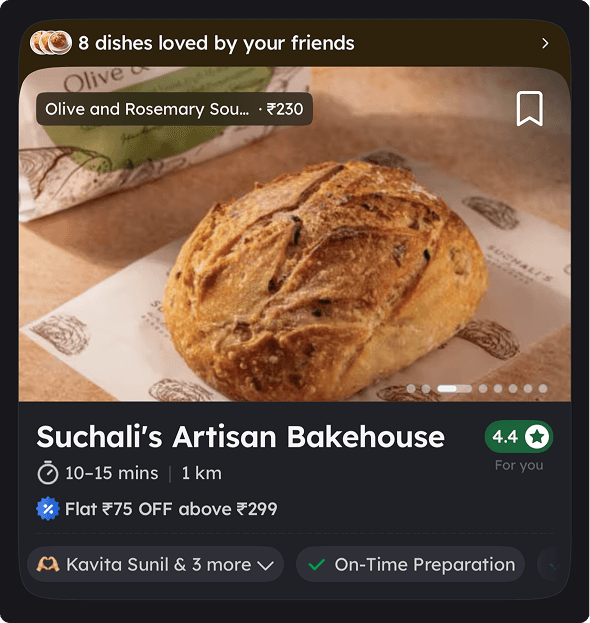
Users were already asking friends for where to eat, just across different apps. Recommendations recreated that behavior inside Thrive.
It was intentionally minimal and conversational. No heavy filters, no platform-driven rankings. Just trusted suggestions from people users already rely on.

FEATURE 2
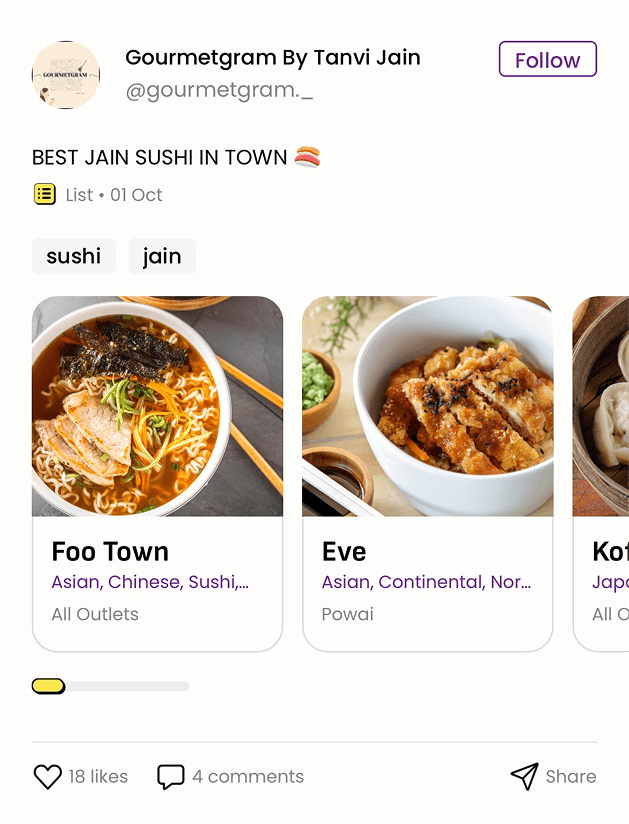
Lists
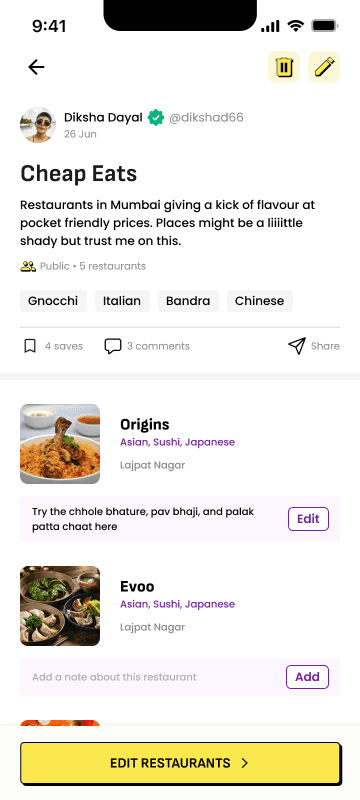
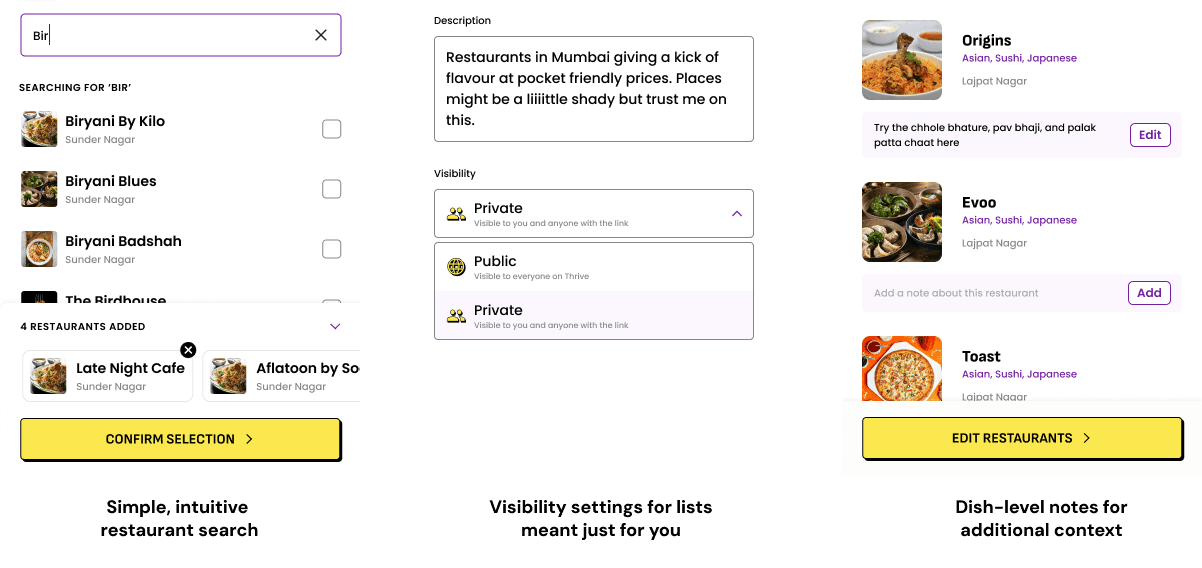
Users curated lists everywhere — screenshots, Maps stars, WhatsApp notes. The Lists feature transformed this messy behavior into a structured, flexible personal library.
I designed Lists to be expressive and identity-driven:
Moods: “Comfort food tonight”
Occasions: “Date night spots”
Personas: “Places to take out-of-towners”
Familiar, but better
I modeled the feature on behaviors users were already familiar with through other social apps like Reddit and WhatsApp, reducing the learning curve and friction for using Thrive.
Outcome
Through a stellar MVP and dedicated customer outreach, we exceeded our goal for monthly active users, and social feed engagement. What surprised us was that not only were new users signing up, they kept coming back, again and again.
40k
monthly active users (MAUs)
+50%
social feed engagement
Although the company eventually shut down for market reasons, the product itself resonated deeply with early users. People shared lists, added friends, and treated discovery as a social, identity-driven experience.
Over the next few years, we saw our competitors in the food delivery space adopting the same features we had ideated, which served as a testament to the fact that we had the right idea!
Reflection
This project taught me a lot, shaping my future design practice.
Reframing vague briefs into actionable design challenges
Every broad problem can be broken down into HMW statements
Designing for trust over growth shortcuts
Algorithmic recommendations could get us quick clicks, but that's not something our users wanted
Design leadership involves wearing a lot of hats
As a team leader, I learned to be equally proficient in steering the design direction and managing my team's bandwidth
Data can tell you a lot
Screen recordings and heatmaps can be great tools to assess user behavior when you don't have time to speak to users directly
Designing Thrive’s discovery component challenged my assumptions and sharpened my craft, and it remains one of my most formative projects.