TL;DR
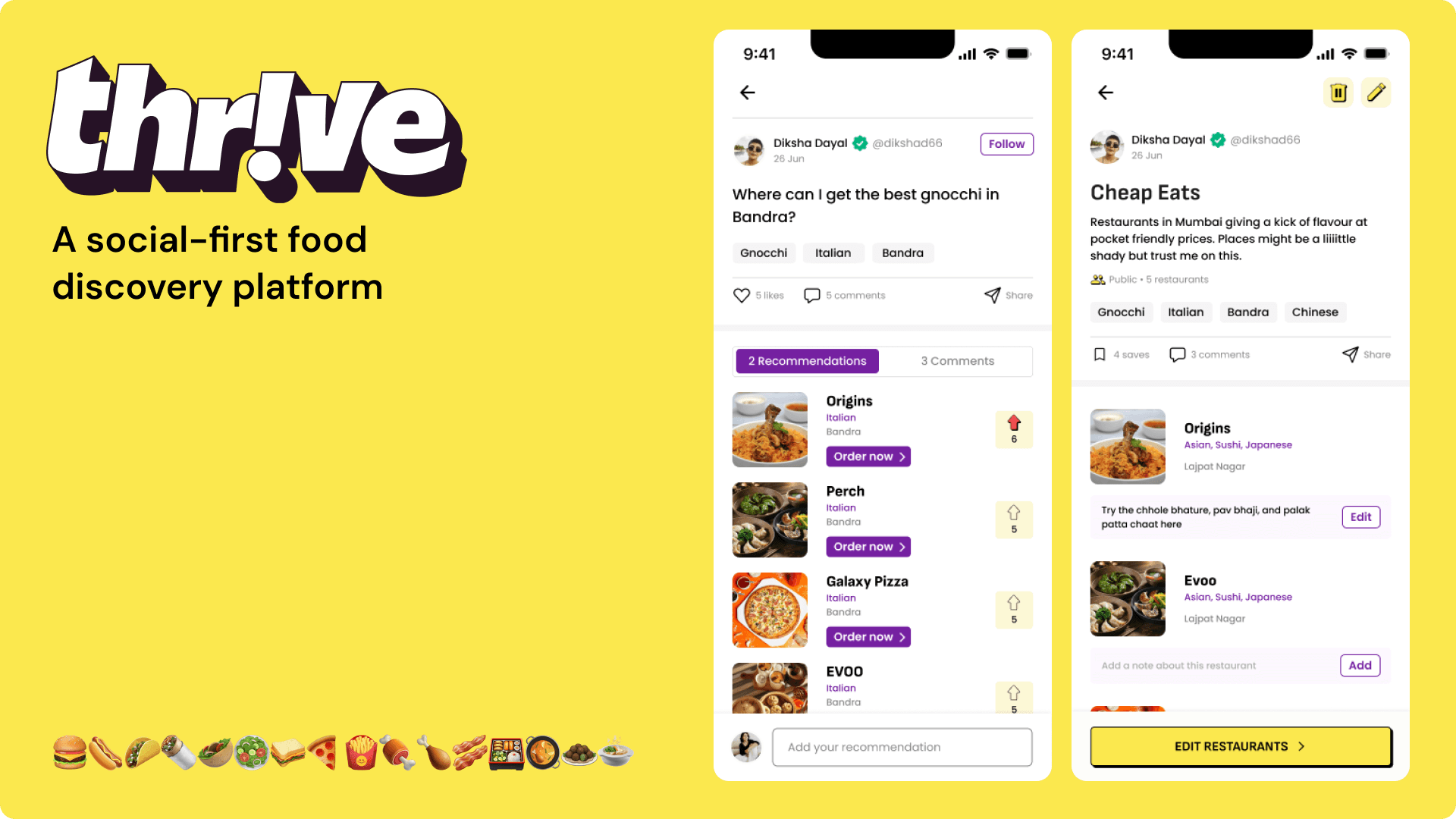
Thrive was a direct-ordering platform in a rapidly growing delivery market. Ordering food was easy, but discovery hadn’t evolved.
Users spent more time deciding than ordering. My challenge was to reframe an ambiguous problem and design a trusted, human-centric discovery experience.
As a senior designer leading the discovery vertical, I conducted background research, created wireframes, tested concepts with users, and proposed and designed key features for the discovery app, and the scaffolding around them.
3 months after launch, the app gained 40K MAUs, a loyal initial user base.
THE PROBLEM
Food apps in India made ordering easy, but deciding to what to order had never been harder.
India’s delivery market was exploding, but users still faced the same question every day: “What should I eat?”
Existing platforms served infinite lists, generic suggestions, and questionable reviews. Their algorithms optimized for visibility, not taste.
Thrive had already existed in the food delivery space as a direct delivery platform, but their foray into restaurant aggregation was new. They wanted to stand out in a saturated market by creating a food delivery app that made discovery as easy as ordering.
Users' dissatisfaction with the existing food ordering ecosystem was becoming increasingly visible on social media.
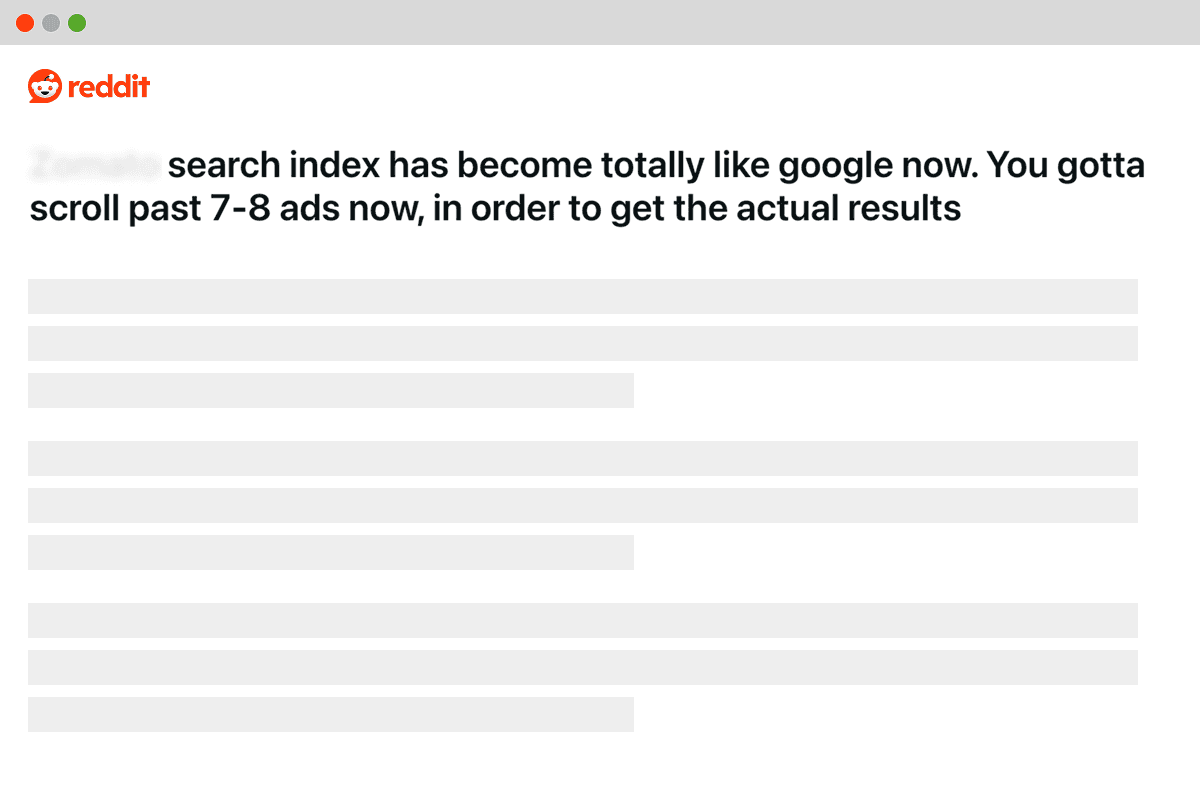

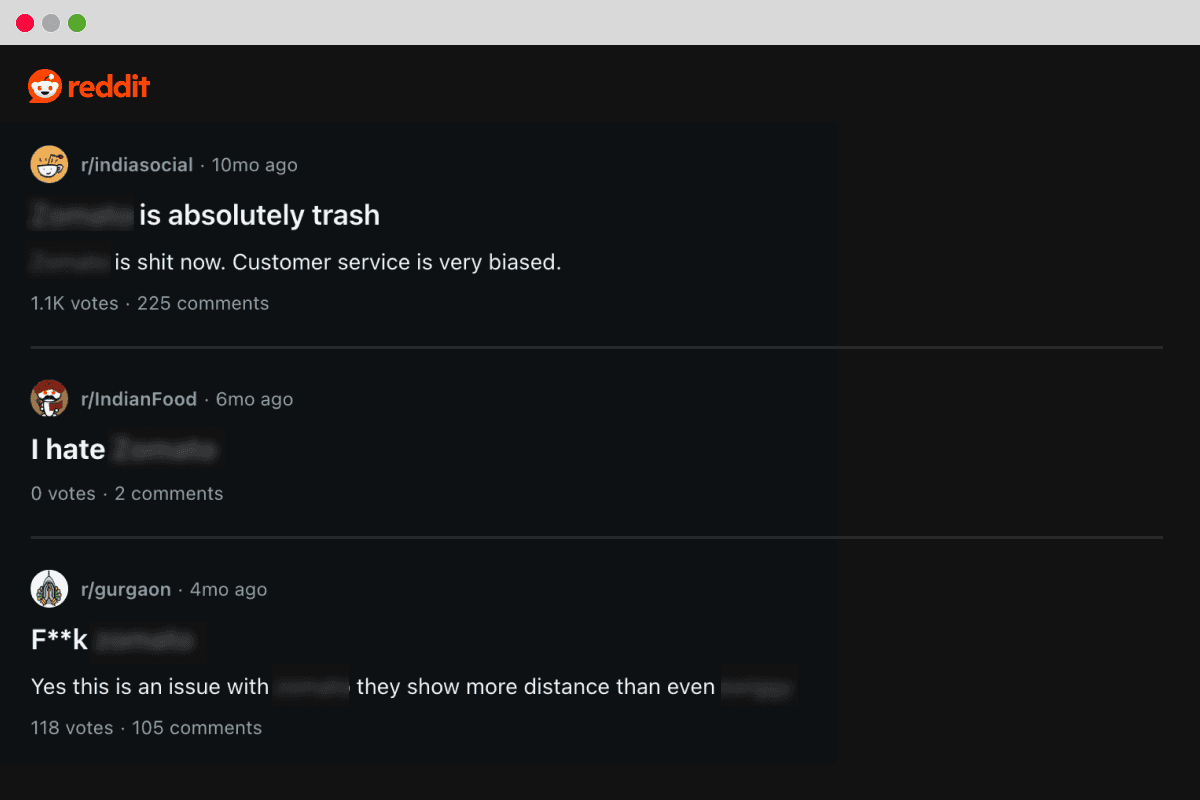

Preliminary research validated our initial hypothesis. Sponsored listings made finding actually good food hard, and fake reviews and ratings muddied the waters even more. Users' trust in the food delivery ecosystem had slowly been eroded.
This lack of trust informed our problem statement.
How might we help people make food decisions
they actually trust, without overwhelming them?
Current Behaviour
My research mapped the gap between what apps offered and how people actually made decisions.
My research goals were simple:
Find hidden behaviors, not validate features
Understand emotional triggers
Map decision journeys from craving → order
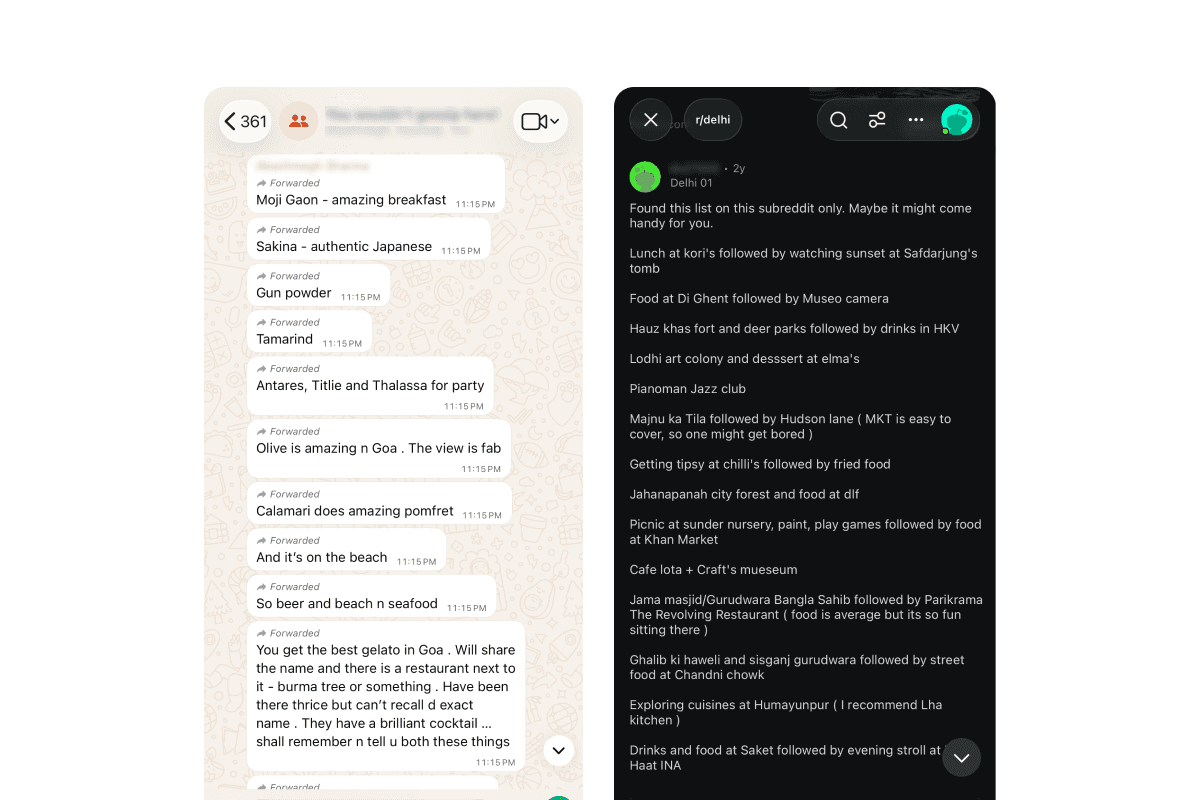
I used secondary research (Reddit, Facebook groups) and primary research (1:1 interviews, Zoom calls, street intercepts) to build a real picture of user behaviour.
Key insight
Food discovery is inherently social.
Research revealed that people were not always using apps to find food. Instead, they were:
Asking friends on WhatsApp
Digging through screenshots
Checking Instagram stories
Consulting group chats
People may pick restaurants from a generic list when they're in a hurry, but when food truly matters, they ask their network. This finding showed up over and over through my research, on social media, on calls, and in person.
Design principles
Our target audience already knew how to discover restaurants through friends, conversations, and recommendations from people they trusted. Research consistently shows that interfaces matching existing mental models reduce friction and speed up adoption. The design principles follow that logic: make the app feel like something users already know how to use.
Mirror existing behaviour
Translate real-life actions to digital app features
Reduce friction
Use mechanisms and mental models people already know
Design for trust
Surface names and faces as signals, not algorithms
explorations
We rapidly iterated on interface variants to find what worked.
I explored several design directions.
Chatbot-style conversations
Card carousels
Social feeds
We tested each direction with users through low-fidelity prototypes to see if it's something users might enjoy.
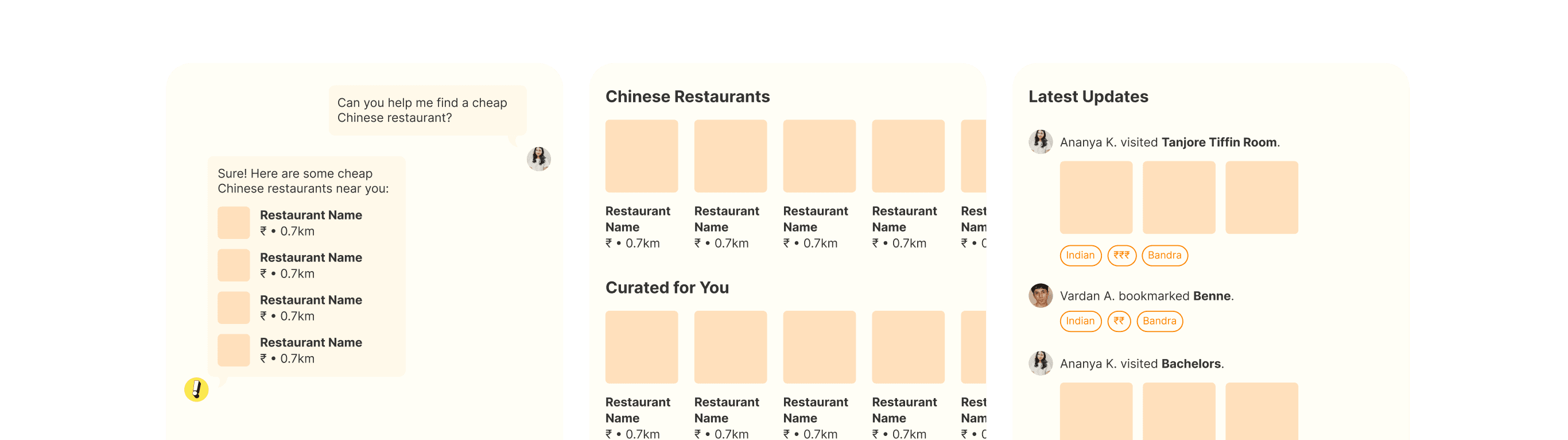

Chat-, card-, and feed-based explorations, and why they didn't work
personas
An app that helps you find good food should be made for people passionate about good food.
For my MVP, I wanted to target early adopters — people who really cared about food, and who'd be open to downloading a new app that made their discovery experience better. I zeroed in on two key personas.
THE CURIOUS EXPLORER
🕵️♀️
Looking for the best possible meal, this persona peruses reviews and asks their friends for recommendations.
THE DINING CONNOISSEUR
🦸
This persona has good taste, and they know it. They've tried everything under the sun, and want to share their findings with their friends.
I then designed two features, each targeting one of these personas.
Feature 1
Recommendations
Users were already asking friends for where to eat, just across different apps. Recommendations recreated that behavior inside Thrive.
It was intentionally minimal and conversational. No heavy filters, no platform-driven rankings. Just trusted suggestions from people users already rely on.


Feature 2
Lists
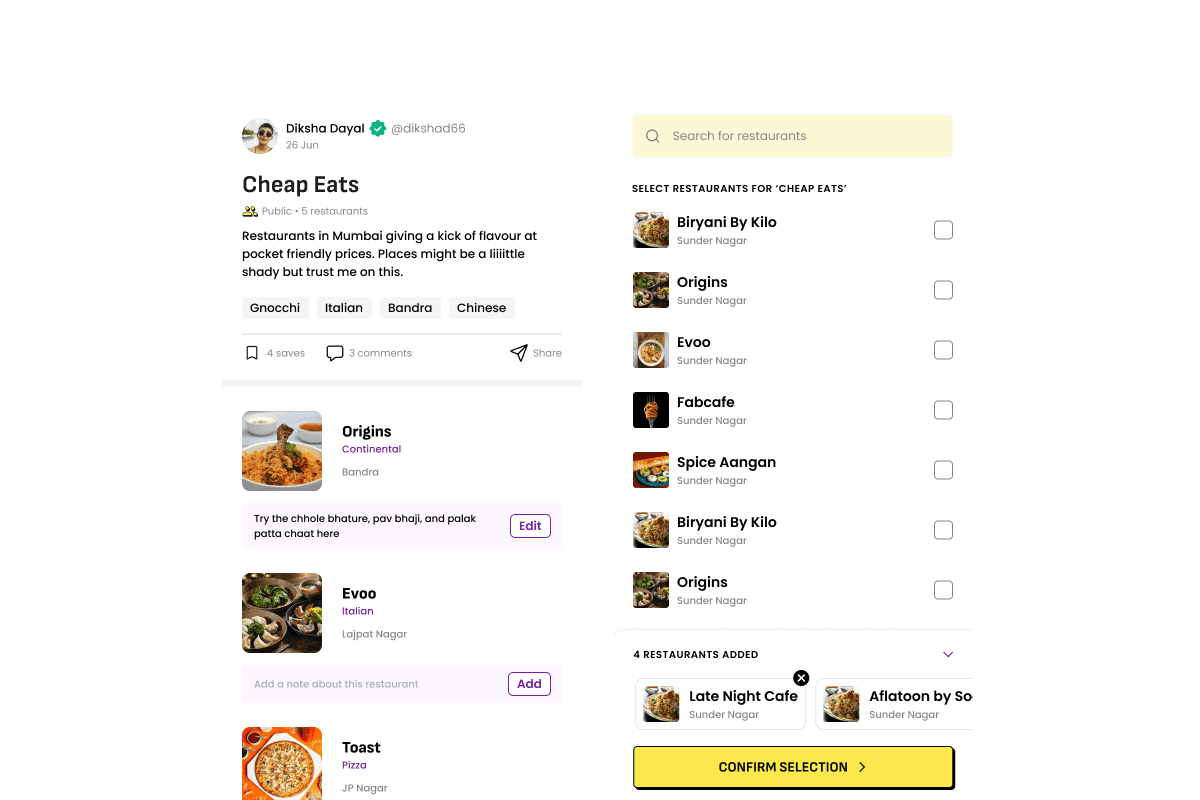
Users curated lists everywhere — screenshots, Maps stars, WhatsApp notes. The Lists feature transformed this messy behavior into a structured, flexible personal library.
I designed Lists to be expressive and identity-driven:
- Moods: “Comfort food tonight”
- Occasions: “Date night spots”
- Personas: “Places to take out-of-towners”
Outcome
Users loved us, and kept coming back.
Through a stellar MVP and dedicated customer outreach, we exceeded our goal for monthly active users, and social feed engagement. What surprised us was that not only were new users signing up, they kept coming back, again and again.
40k
monthly active users (MAUs)
+50%
social feed engagement
Although the company eventually shut down for market reasons, the product itself resonated deeply with early users. People shared lists, added friends, and treated discovery as a social, identity-driven experience.